
 ,
,


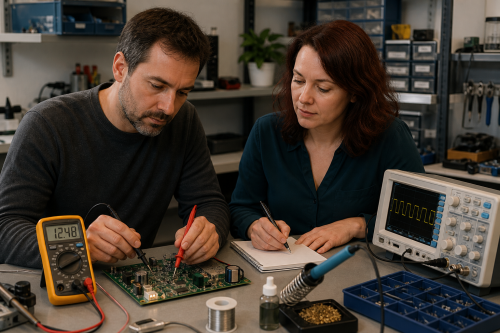
A device that no longer works is not automatically beyond repair. A connector, switch, power supply, capacitor, cable, bearing or contaminated contact can be a small defect with a large visible effect.
A useful assessment starts with what the device did immediately before the fault, what still works and whether it is safe to measure. Only then does the question follow whether repair, parts recovery or replacement is the most sensible route.
Make and model, symptoms, previous repairs, visible damage, smell, sound, temperature and the circumstances in which the fault appeared. Bring the power supply, cables and accessories as well if they may be part of the problem.
When safety cannot be restored reliably, critical parts are unavailable without a realistic alternative, or the damage is so extensive that a replacement device is clearly more sensible. That judgement should be based on inspection, not age alone.
Because random replacement can introduce new faults and mask the original cause. Measurements of supply voltages, signals, resistance or temperature provide a hypothesis that can then be tested deliberately.
This connects to Basic repair and, for electronic equipment, Electronics.
Copyright © 2026, ASK-Solutions


