
 ,
,


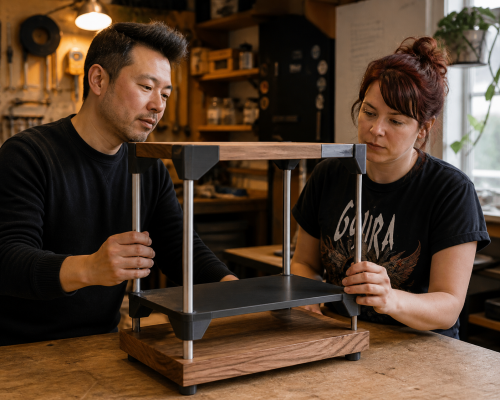
A small part, frame, stand or structure starts with function and dimensions. Only then do material, joining method and tools follow.
Wood and metal require different processes, but the same design questions return: where do forces run, which tolerances are needed, should something be removable and which finish suits the use?
Look at stiffness, weight, moisture, temperature, wear, appearance and available processing. Wood is quick to shape and pleasant for many structures; metal can be thinner and stiffer or cope better with heat and wear.
Screws, bolts, adhesive, woodworking joints and welding have different properties. Choose according to load and disassembly needs. A prototype can first use simple bolted joints before anything is welded permanently.
For simple pieces, a dimensioned sketch may be enough. Once several parts come together or a part needs to be reproduced, a clear drawing or CAD model helps prevent mistakes.
Woodworking, Metalworking and, where appropriate, Welding are the direct practical starting points. For complex adapters, 3D printing can complement them.
Copyright © 2026, ASK-Solutions


